The Business Case for Dairy-Free Cheese Sauce on Your Menu
Most operators approach dairy-free cheese sauce as an accommodation — something you add to serve the guests who can’t have dairy. That framing undersells it significantly.
The real case for dairy-free cheese sauce in 2026 isn’t about dietary restrictions. It’s about revenue, guest retention, operational simplicity, and menu differentiation. The accommodation just happens to come along for the ride.
The Market Has Already Moved — Most Menus Haven’t
Two converging trends are reshaping what guests expect from cheese sauce on a menu:
Food allergy prevalence. One in ten adults and one in thirteen children in the US has a diagnosed food allergy. Dairy is one of the most common. For a restaurant, stadium, cafeteria, or catering operation serving hundreds of guests per service, statistically a meaningful portion of every crowd cannot eat your current cheese sauce. They’re ordering around it — or not ordering at all.
Metabolic health awareness. Over 40 million Americans are currently on GLP-1 medications, and tens of millions more are actively managing their diet for metabolic health reasons. These guests aren’t avoiding cheese sauce because they don’t want it. They’re avoiding it because conventional cheese sauce — high in saturated fat, calories, and often ultra-processed ingredients — doesn’t fit how they’re eating now.
Both groups represent guests who are currently leaving money on the table at your cheese sauce station. A well-formulated dairy-free option captures them without changing anything else about your menu.
The Revenue Math Is Straightforward
Consider a high-volume application like a nacho station, mac and cheese bar, or loaded fries build. If 8–10% of your guests are currently opting out of that item due to dairy restrictions or dietary preferences, and your average check contribution from that item is $6–9, the math on recapture adds up quickly across a season or a school year.
More importantly: guests who feel accommodated come back. Guests who feel excluded don’t — and in the age of dietary restriction awareness, “we don’t have a dairy-free option” is increasingly a reason not to return, not just a minor inconvenience.
For catering and event operators, the calculus is even clearer. A single allergen incident at a corporate event or wedding is a reputational and liability event. A top-9-free cheese sauce eliminates that risk vector entirely from one of the highest-volume stations at any event.
Operational Simplicity Is an Underrated Part of the ROI
Running separate allergen-safe prep stations, maintaining separate utensils, and training staff on cross-contamination protocols for a dairy-free accommodation is expensive — in time, training overhead, and the ongoing cognitive load of service.
A top-9-free cheese sauce that replaces your conventional sauce entirely changes the math. You’re not running two sauces. You’re running one sauce that happens to work for everyone. The allergen accommodation becomes zero marginal cost because it’s built into the base product.
For K-12 and healthcare operations in particular, this simplification has direct compliance value. Fewer allergen management touch points means fewer failure modes — and cleaner documentation if you ever need to demonstrate your allergen protocols.
Menu Differentiation Is Increasingly Hard to Buy — This One Is Cheap
In competitive foodservice markets — fast casual, hotel F&B, stadium concessions — menu differentiation is expensive. New proteins, new cuisines, new formats all require significant R&D, training, and equipment investment.
Swapping your cheese sauce is not that. It’s a direct ingredient substitution that requires no new equipment, no new training, and no menu redesign. But the story it lets you tell — allergen-friendly, GLP-friendly, clean label, plant-based — is a genuine differentiator that a meaningful and growing segment of your guest base will notice and value.
“Our cheese sauce is dairy-free, top-9 allergen free, and only 50 calories per serving” is a menu callout that generates conversation. It attracts press coverage in the right markets. It positions your operation as one that pays attention to how people are actually eating — not just how they ate five years ago.
The Shelf Life Advantage Changes Your Procurement Economics
Conventional cheese sauce is a cold chain product. It requires refrigerated storage before opening, has a limited shelf life once received, and creates spoilage risk if service volume is unpredictable.
A shelf-stable dairy-free cheese sauce with a 545-day shelf life changes that equation. Order in case quantity, store at ambient temperature, open as needed. No cold chain management, no spoilage risk, and significantly more flexibility in how you manage inventory across locations or service windows.
For multi-location operators, this is a meaningful procurement simplification. For catering and event operators working from commissary kitchens or remote service locations, it’s the difference between logistical complexity and a sauce you can just put in the truck.
How to Think About the Transition
The most common operator concern about switching to dairy-free cheese sauce is guest reaction — specifically, whether regulars will notice and object. The honest answer is: if the sauce is formulated correctly, they won’t. The goal is indistinguishable flavor and texture, not a compromise that guests have to accept.
The practical path for most operations:
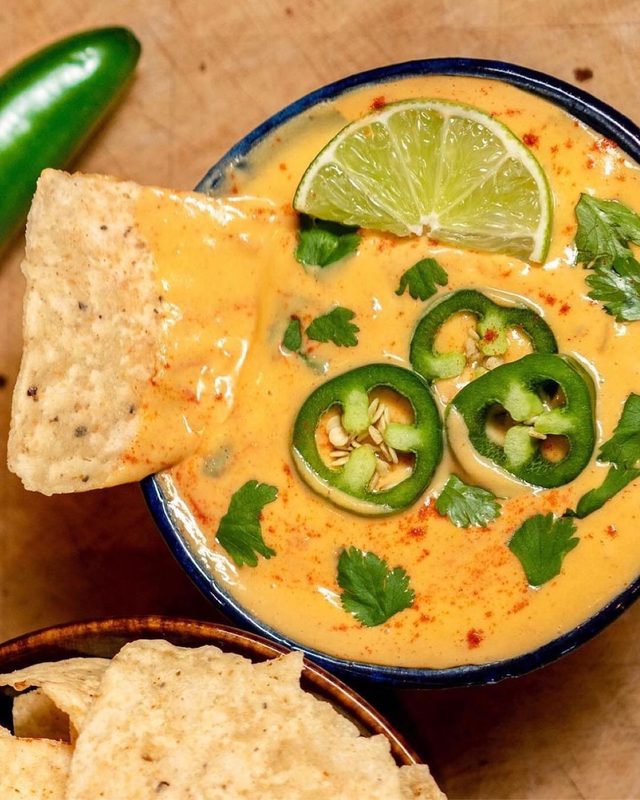
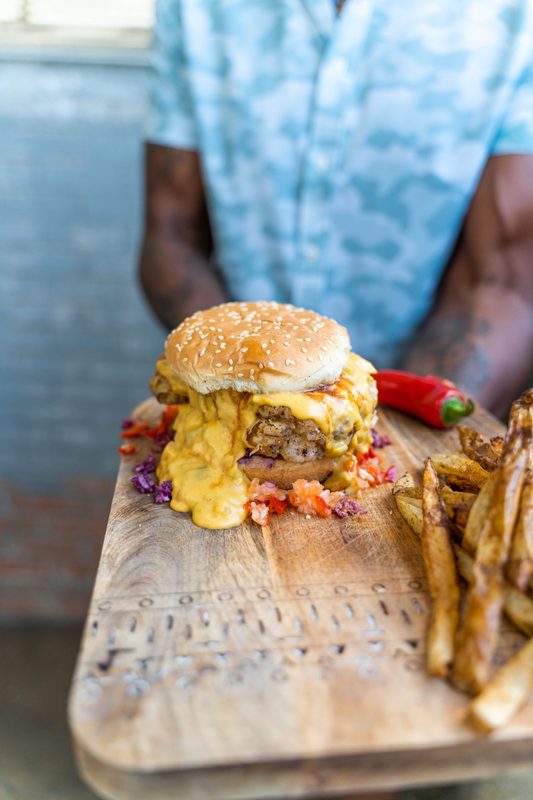
- Trial on one application first. Mac and cheese, nachos, or a loaded fries build are the easiest starting points — high volume, high cheese sauce visibility, easy to evaluate guest response.
- Don’t announce it as a switch. Let the product speak. If guests don’t notice, you have your answer.
- Then market it. Once you’ve confirmed the product performs, the allergen-free, GLP-friendly, clean label story becomes a front-of-menu talking point — not a defensive explanation.
FAQ
Will guests who are used to conventional cheese sauce notice the difference?
With a well-formulated dairy-free cheese sauce, most won’t. The target is indistinguishable flavor and texture — the same savory, creamy, craveable experience — without the dairy. The best test is running it without announcement and tracking whether complaints or compliments change.
Does switching to dairy-free cheese sauce require menu reprinting or significant marketing investment?
No immediate changes are required. The sauce is a direct operational substitution. Menu callouts and marketing language around allergen-free and GLP-friendly positioning can follow once you’ve confirmed the product works in your service environment.
Is dairy-free cheese sauce cost-competitive with conventional options?
For most institutional purchasers, yes — particularly when you factor in shelf life (545 days), cold chain savings, and reduced spoilage. Request a full spec sheet with pricing and run the landed cost comparison against your current product.
What’s the right way to introduce it to our team?
Frame it as a product upgrade, not a dietary accommodation. The sauce performs better operationally, serves more guests, and reduces allergen liability. Those are kitchen wins independent of the plant-based angle.
Can we use it across multiple menu applications without reformulating or adjusting anything?
Yes. A drop-in dairy-free cheese sauce performs identically to conventional cheese sauce across applications — nachos, mac and cheese, burrito bowls, loaded fries, soup bases, breakfast builds. One product, no additional prep or training required.
See It in Your Kitchen First
The fastest way to make the ROI case internally is to run a sample through your actual service. Credo ships free samples of both the Chef-Crafted Cheese Sauce and the Cashew Queso directly to foodservice kitchens — no commitment, no middleman.