How to Tell If a Food Is Ultra-Processed: The Complete Ingredient Decoder
In this guide
Intro
The MAHA movement and clean-label conversation have made “ultra-processed” one of the most searched food terms of 2025 and 2026. But knowing the label, NOVA Group 4, is not the same as knowing what to look for in a grocery store aisle. Most consumers can identify obvious junk food. The harder question is what makes a “healthy” granola bar, a protein shake, or a jarred pasta sauce ultra-processed when it does not look or taste like junk.
This guide covers the NOVA classification in plain language, the 12 specific ingredients that signal ultra-processing, the fastest way to check a label in under five seconds, and how to apply the framework to common foods including condiments.
The NOVA Classification, Explained
The NOVA system categorizes all foods into four groups based on how much industrial processing they have undergone. Understanding these groups gives you a framework for any food decision at the grocery store. The system was developed by Brazilian nutrition researcher Carlos Monteiro and colleagues at the University of São Paulo. It is now referenced in nutrition research worldwide and has become the standard way scientists talk about food processing.
Group 1, Unprocessed or Minimally Processed Foods, are the foundation of a healthy diet. These include whole fruits and vegetables, nuts and seeds, eggs, plain meat and fish, plain milk and yogurt. They are foods in their natural state or cleaned, dried, frozen, or pasteurized but never chemically altered. These require no added ingredients to be eaten.
Group 2, Processed Culinary Ingredients, are things extracted from Group 1 foods to use in cooking. This category includes oils, butter, salt, vinegar, sugar, and flour. They are created by pressing, refining, grinding, pasteurizing, or drying, but they do not contain added substances. The key point: these are not foods you eat on their own. They are ingredients you use to prepare Group 1 foods in your kitchen.
Group 3, Processed Foods, are made by combining Group 1 and Group 2 products. Examples include canned vegetables, cured meats, simple cheeses, and freshly baked bread. Processing preserves them or adds flavor, but the ingredient list is recognizable. If you were to make the food at home, you would use the same or very similar ingredients. Most dairy products, canned legumes, and naturally fermented foods fall here.
Group 4, Ultra-Processed Foods, are industrial formulations made mostly from Group 2 substances plus additives not found in home kitchens. The distinguishing feature is not that they are shelf-stable or packaged. The distinguishing feature is that they contain ingredients you would not use in home cooking: emulsifiers, stabilizers, artificial flavors, synthetic vitamins, modified starches, and other industrial compounds. These foods are engineered for maximum shelf life, consumer appeal, and profit margin rather than nutrition.
| NOVA Group | Name | Examples |
|---|---|---|
| 1 | Unprocessed / Minimally processed | Fresh fruit, plain chicken, oats, eggs, raw almonds |
| 2 | Processed culinary ingredients | Olive oil, salt, flour, sugar, vinegar, honey |
| 3 | Processed foods | Canned tomatoes, cured bacon, natural cheese, whole grain bread |
| 4 | Ultra-processed | Packaged snacks, fast food, most jarred sauces, flavored yogurts |
12 Dead-Giveaway Ingredients That Signal Ultra-Processing
Not every food with one of these ingredients is ultra-processed, and not every ultra-processed food contains all of them. But finding three or more of these in a single product strongly suggests NOVA Group 4. Here are the clearest markers:
Hydrogenated and partially hydrogenated oils are created by forcing hydrogen into liquid oils to make them solid or semi-solid at room temperature. Partially hydrogenated oils are the primary source of industrial trans fats. The FDA largely banned them in 2018, but fully hydrogenated oils still appear in some products, particularly in international brands and specialty items. If you see either term, the food has undergone industrial chemical alteration.
High-fructose corn syrup is a refined sweetener made by converting corn starch into fructose through enzymatic processing. It is metabolized differently than glucose and has been linked to higher rates of fat storage and insulin resistance at high intake. It is the most common added sweetener in ultra-processed foods and appears in soft drinks, breakfast cereals, granola bars, and many condiments.
Maltodextrin is a highly processed starch derived from corn, wheat, or potato through acid or enzyme hydrolysis. It has a glycemic index higher than table sugar, spiking blood glucose rapidly. It shows up in “low-fat” or “reduced-calorie” products as a filler to replace fat volume and texture. It is a clear marker of industrial engineering.
Carrageenan is extracted from red seaweed using alkaline chemical processing. In food-grade form (kappa carrageenan), it is used as a thickener and stabilizer in plant-based products and ice creams. Some research has raised concerns about gastrointestinal inflammation at high intake, though the evidence is mixed and the typical exposure is thought to be safe for most people.
Modified food starch is starch chemically treated to improve stability, texture, or shelf life through acid, enzyme, or cross-linking processes. It is not inherently harmful, but it is a marker of industrial formulation. It appears in gravies, sauces, and soups where a clean thickener like arrowroot or cornstarch would otherwise suffice, or where no thickener is needed at all.
Artificial flavors are synthesized chemical compounds that replicate the taste of natural ingredients through laboratory creation. They work in extremely small amounts and are used when real ingredients would be too expensive, unstable in a shelf-stable product, or inconsistent in flavor. The presence of artificial flavors indicates that the manufacturer chose cost and consistency over real food.
Natural flavors sound wholesome, but the FDA definition is broad: any flavor derived from a plant, animal, seafood, dairy, or fermentation source. This means natural flavor can include dairy-derived compounds in a “dairy-free” product, MSG-adjacent glutamates, or other highly processed flavor extracts. It is not the same as “real food” and often indicates a manufacturing shortcut where real ingredients would be better.
Soy protein isolate is a highly refined form of soy where protein is extracted from defatted soy flour using chemical processing and solvent extraction. It is used in protein-enriched products, protein bars, and plant-based meats. The processing strips most of the whole-food context from the original soybean, leaving only isolated protein that does not resemble food in its natural form.
Dextrose and corn syrup solids are forms of glucose derived from corn starch through hydrolysis. They are used as sweeteners, fillers, browning agents, and flavor carriers. They show up in sauces, seasonings, packaged snacks, and breakfast cereals. Finding them in a product indicates that the manufacturer used industrial carbohydrate derivatives instead of whole foods or simple sugars.
BHA (butylated hydroxyanisole) and BHT (butylated hydroxytoluene) are synthetic antioxidants used to prevent oils from going rancid and extend shelf life. They are classified as “generally recognized as safe” by the FDA but are listed as possible carcinogens by some international health agencies. They are banned or restricted in some countries. Their presence signals that the product prioritizes longevity over ingredient safety.
Mono- and diglycerides are emulsifiers derived from fatty acids through chemical processing. They prevent oil and water from separating and appear in bread, peanut butter, ice cream, and salad dressings. They can be animal or plant derived. While they are considered safe in small amounts, their presence indicates that a product was engineered for texture and appearance rather than allowed to be its natural self.
Caramel color is produced by heating carbohydrates with ammonium compounds in an industrial process. Class III and IV caramel colors produce a compound called 4-MEI, which California classifies as a possible carcinogen. Class III and IV caramel colors appear in dark sodas, some sauces, and baked goods. Class I and II are considered safer alternatives, but the presence of Class III or IV is a significant red flag.
The 5-Second Label Test
You do not need to memorize the 12 ingredients above to spot ultra-processed foods. Three fast checks will catch most Group 4 products in the aisle:
Check 1: Count the Ingredients
If the ingredient list has more than 8 to 10 ingredients, the product is likely NOVA Group 3 or 4. Ultra-processed foods typically run 15 to 30 ingredients. Simple foods have short lists. A can of beans might have 3. A loaf of whole grain bread might have 6. A pasta sauce from a jar should not need 20.
Check 2: Scan for “-ate” and “-ide” Suffixes
Look for words ending in “-ate” or “-ide” beyond basic minerals like potassium iodide in iodized salt or sodium citrate in naturally flavored products. Emulsifiers (polysorbate 80), stabilizers (carboxymethylcellulose), and preservatives often use these suffixes. If you find three or more, the product is engineered.
Check 3: Identify the Fat Source
Check the fat source listed in the ingredients. If the oil is canola, soybean, sunflower, safflower, or a generic “vegetable oil,” the product is using industrial seed oils as a primary fat. These are markers of large-scale industrial manufacturing. Whole-food fats like cashews, almonds, coconut, or olive oil suggest less processing and more real food content.
Quick Decision Tree
Fewer than 8 ingredients, all recognizable? Probably Group 1 to 3. You are looking at real food.
More than 10 ingredients OR unpronounceable ingredients? Likely Group 4. Ultra-processed.
Contains hydrogenated oils, HFCS, maltodextrin, or artificial flavors? Group 4, confirmed. Put it back.
Common Foods You Might Not Realize Are Ultra-Processed
Ultra-processing is not always obvious. These categories look healthy on the shelf but fail the 5-second test:
“Healthy” Granola Bars
Most granola bars marketed as wholesome contain maltodextrin, soy protein isolate, and 5 to 8 different sweeteners across glucose syrup, honey, brown rice syrup, and cane sugar. The ingredient list often runs 20 or more items with multiple binders, coatings, and flavor compounds. A bar that weighs 40 grams should not need more than 10 ingredients. High processing is hidden behind words like “natural” and “whole grains.”
Most Plant-Based Meats
Plant-based meat alternatives are heavily engineered with methylcellulose, a synthesized fiber used as a binder, pea protein isolate, and artificial flavors to mimic the taste of meat. They are among the most ultra-processed foods in the grocery store. NOVA Group 4 is certain. Real plant foods, from beans to mushrooms to nuts, are far less processed and offer similar or better nutrition.
Flavored Greek Yogurts
Plain Greek yogurt from milk, cultures, and salt is NOVA Group 1. Add fruit flavoring, thickeners, stabilizers, and sugar syrups and it becomes NOVA Group 4. Most “strawberry” flavored yogurts do not contain strawberries. They contain strawberry flavor, added sugar, and carrageenan. Check whether the flavor is real fruit or an additive.
Most Boxed Cereals
Even ones marketed as whole grain are processed with high heat extrusion that breaks down the grain structure and destroys vitamins. They contain added sugars and include synthetic vitamins added back after processing destroys natural ones. The ingredient list typically includes 8 to 12 items including maltodextrin, corn syrup, and artificial flavors. A bowl of steel-cut oats with fruit is far less processed.
“Low-Fat” Salad Dressings
Fat is replaced with modified starch, maltodextrin, and additional sugar in low-fat dressings. The result has similar or higher calorie density with a worse ingredient profile than the full-fat version. Full-fat olive oil based dressings with vinegar, salt, and herbs are Group 2 or 3. Low-fat versions are typically Group 4.
Bottled Smoothies
Real fruit would oxidize, separate, and lose color quickly on a shelf. Most shelf-stable bottled smoothies use stabilizers like carrageenan, natural flavors, and often added sugars to maintain appearance and taste. A smoothie you blend yourself from frozen fruit, yogurt, and milk is Group 1 to 2. A bottled version in the aisle is Group 4.
Jarred Pasta Sauces
Many run 15 to 20 ingredients with added sugar, often 6 to 10 grams per serving, citric acid, natural flavors, and sometimes modified starch. Simple versions made from tomatoes, olive oil, and basil exist and are NOVA Group 3. Most commercial jars have been engineered for shelf life and taste consistency, not food quality. Make it at home or buy brands with fewer than 6 ingredients.
Most Cheese Sauces and Quesos
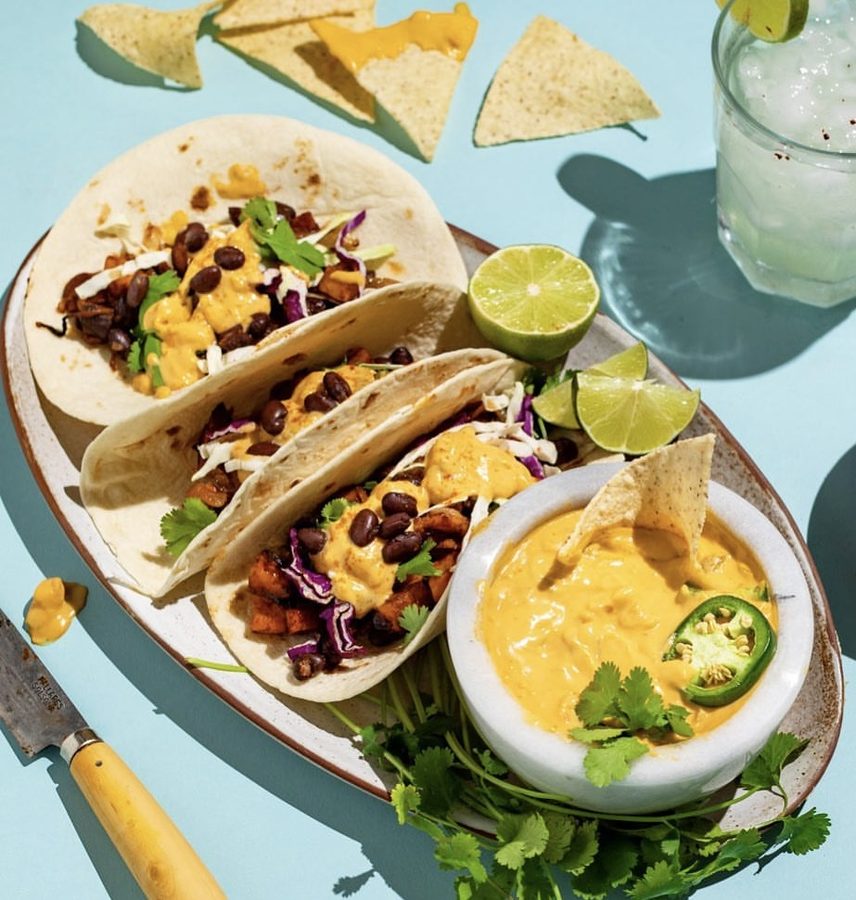
Conventional jarred cheese sauce is typically NOVA Group 4. It contains processed cheese (not real cheese), sodium phosphate as an emulsifier, soybean oil, artificial color, and natural flavor. That is four or more ultra-processing markers in a single product. This is the context for why alternative formulations with shorter, cleaner ingredient lists stand out.
How Credo’s Products Fit the Framework
We’re not going to pretend Credo is “minimally processed” by a strict NOVA definition. Our Oat Milk Queso comes in a shelf-stable jar, which means it goes through some processing. That’s the truth.
Here’s the full ingredient list: oat milk (water, oats), cashew butter, red peppers, nutritional yeast, jalapeños, agave, sea salt, plant-derived lactic acid, a dehydrated vegetable blend (tomato, garlic, onion, shiitake, cayenne, chipotle), sodium citrate, annatto, xanthan gum, paprika, and spices.
One ingredient on that list deserves a closer look: xanthan gum. It shows up on most “avoid this” UPF lists because of how NOVA classifies anything that wasn’t in your grandmother’s pantry. But the science on xanthan gum is more nuanced than the lists suggest. It’s a soluble fiber produced by fermenting a plant substrate with a naturally occurring bacterium. In the gut, it behaves like other soluble fibers: it slows gastric emptying (which is part of why GLP-1 users tolerate it well), can blunt post-meal glucose spikes, and has prebiotic activity that supports the gut microbiome.
Whether you call that “ultra-processed” or “functional fiber” depends on whether you’re reading the ingredient list or the research.
We use it because the alternative for getting the same texture is either dairy (which defeats the point) or a longer list of stabilizers and gums. One xanthan gum at the bottom of the list, paired with whole-food fats from cashews and oats, is a trade-off we think is reasonable. You can decide.
The rest of the list passes the 5-second test: under 15 ingredients, no hydrogenated oils, no high-fructose corn syrup, no artificial flavors, no artificial colors, no preservatives, no seed oils. Compare that to most jarred queso, which runs 25 or more ingredients with at least 4 to 5 of the dead-giveaway UPF markers from the list above.
Credo’s full lineup is available at shop.credofoods.com.
Frequently Asked Questions
1. What does ultra-processed mean?
Ultra-processed refers to NOVA Group 4 foods, industrial formulations made mostly from refined substances and additives not found in home kitchens. The distinguishing characteristic is not just processing but the use of ingredients like emulsifiers, stabilizers, artificial flavors, and modified starches that do not exist in whole food form. The NOVA classification was developed by researchers at the University of São Paulo and is now widely used in nutrition research.
2. Is queso ultra-processed?
Conventional jarred queso is typically NOVA Group 4. Most contain processed cheese (not real cheese), sodium phosphate as an emulsifier, soybean oil, artificial color, and natural flavor, which is four or more UPF markers in a single product. Credo’s Oat Milk Queso has a shorter, cleaner ingredient list and does not contain processed cheese, artificial colors, or multiple emulsifiers.
3. Is hummus ultra-processed?
Simple hummus made from chickpeas, tahini, olive oil, lemon, and salt is NOVA Group 3 at most. The ingredients are recognizable and not industrially refined. Some packaged versions add modified starch, preservatives, or artificial flavors and move into Group 4. Read the ingredient list of the brand you buy.
4. Are all packaged foods ultra-processed?
No. Canned tomatoes, natural cheese, plain yogurt, and many other packaged foods are NOVA Group 3. The key question is whether the ingredient list contains substances you would not find in a home kitchen, not whether the food comes in a package. Packaging is about convenience and preservation, not processing level.
5. Is plant-based cheese ultra-processed?
Most plant-based cheese products are NOVA Group 4. They typically contain methylcellulose, starch derivatives, refined coconut oil, and multiple artificial or natural flavors to simulate dairy texture. Cashew or oat-based cheese sauces with shorter ingredient lists fall closer to Group 3, though still more processed than real cheese.
6. What is the difference between processed and ultra-processed?
Processed foods (NOVA Group 3) combine whole food ingredients to preserve or enhance them, such as canned beans, cured meats, and artisan cheese. Ultra-processed foods (NOVA Group 4) use industrial substances not present in whole foods as primary ingredients. The difference is not about packaging or shelf life. It is about the ingredient composition and whether you could make it at home with reasonably available ingredients.
7. Is there a list of UPF ingredients to avoid?
The 12 clearest indicators are: hydrogenated oils, high-fructose corn syrup, maltodextrin, carrageenan, modified food starch, artificial flavors, natural flavors (context-dependent), soy protein isolate, dextrose or corn syrup solids, BHA or BHT, mono- and diglycerides, and caramel color Class III or IV. Finding any three or more of these in a single product strongly suggests NOVA Group 4.
8. Are seed oils ultra-processed?
Seed oils are NOVA Group 2, processed culinary ingredients extracted from seeds through pressing or refining. They are not ultra-processed on their own. But they become markers of ultra-processed products when they appear in long ingredient lists alongside emulsifiers, artificial flavors, and other Group 4 additives. Context matters more than the oil itself.